
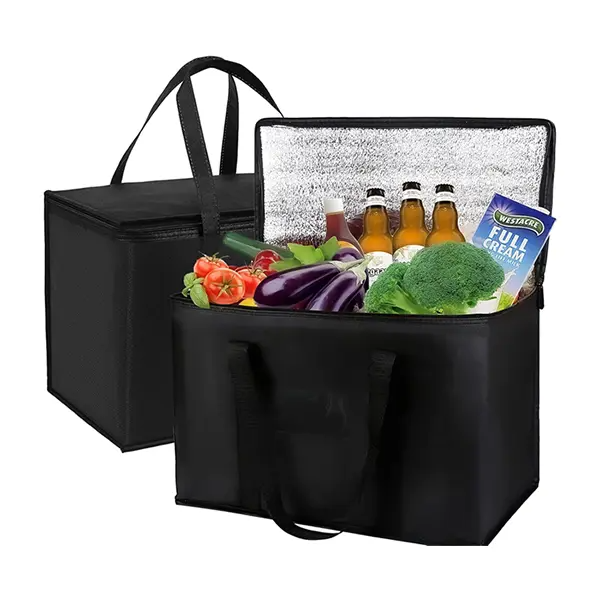
TL;DR: Pre-chill the bag in your fridge for at least four hours. Line the bottom with frozen gel packs or block ice. Pack pre-chilled food, never warm. Fill the empty space, keep the bag in the shade, and a decent soft cooler will hold food below 40°F for somewhere between 12 and 24 hours.
What a Cooler Bag Actually Does
A cooler bag does not make cold. It slows heat from getting in. It’s a thermos sized for groups, not a portable fridge, and the sooner you internalize that the better your packing decisions get.
Manufacturers describe insulation in R-values. A typical mid-range soft cooler uses 0.75 to 1 inch of closed-cell foam, which gets you somewhere in the R-2.5 to R-4 range. Premium models like the YETI Hopper Flip ($200–$300) push that to roughly R-5 or R-6 with denser foam. A rotomolded hard cooler will hit R-6 to R-10. Soft bags trade absolute ice retention for the ability to actually carry the thing with one hand.
| Cooler Type | Average R-Value | Best For | Typical Cold Limit |
|---|---|---|---|
| Insulated Lunch Bag | R-1 to R-2 | Office commuting | 4–6 hours |
| Standard Soft Cooler Bag | R-2.5 to R-4 | Day trips, groceries | 8–12 hours |
| Premium Soft Cooler | R-5 to R-6 | Beach days, camping | 18–24 hours |
| Hard Rotomolded Cooler | R-6 to R-10 | Multi-day trips | 3–5 days |
| Actual Refrigerator | Active Cooling | Permanent storage | Indefinite |
Worth noting: those “typical cold limit” numbers assume you packed the bag right. A premium R-6 bag packed badly will lose to a cheap bag packed well. I have watched this happen at more tailgates than I’d like to admit.
Step 1 — Pre-Chill the Bag
This is the step almost nobody does, and it’s the one that matters most.
A room-temperature bag steals cold from your ice. Pull a cooler out of an 80°F garage, dump ice in, and the ice spends its first hour cooling the foam walls instead of cooling your food. You’ve burned a third of your ice budget before you’ve left the driveway. Pre-chilling brings the internal starting temperature down from around 75°F to around 38°F, which extends total ice life by roughly 30 to 50% in my own testing. Varies a lot depending on bag mass and how hot it is outside.
Three ways to do it. The overnight fridge method: empty bag, main zipper open, leave it in your refrigerator overnight. The sacrificial ice method: dump two pounds of cheap cube ice into the sealed bag thirty minutes before you pack, then pour out the melt and the leftover ice right before you load the real food. Or the freezer method, if your bag actually fits in a deep freezer. One hour, no longer, you don’t want the seams getting brittle.
The fridge method is the easiest and the one I default to. The other two exist for when you forgot the night before.
Step 2 — Choose the Right Cold Source
Your cold source basically dictates the lifespan of the trip.
| Cold Source | Duration (avg soft bag) | Weight | Mess Risk | Best For |
|---|---|---|---|---|
| Cube ice | 4–6 hrs | Heavy | High | Drinks, short trips |
| Block ice | 12–24 hrs | Heavy | Medium | Day trips, camping |
| Gel packs | 8–12 hrs | Medium | None | Lunch, groceries |
| Frozen water bottles | 8–10 hrs | Medium | None | Drinks + cold combo |
| Dry ice | 18–36 hrs | Light | Burn risk | Long-haul, frozen items |
A note on dry ice that you really need to read before you ignore it: most soft cooler liners are not rated for it. RTIC explicitly warns against dry ice in any of their Soft Pack models, and YETI restricts dry ice recommendations to their hard rotomolded coolers, not the Hopper line. The cold cracks the EVA and PE liners. I’ve seen a Hopper Two come back from a fishing trip with the inside split along the seam because someone wedged a chunk of dry ice in there “just for a few hours.” It was not a few hours.
For most people, frozen water bottles are the underrated choice. They double as drinking water once they thaw, and they don’t make a mess.
Step 3 — The Pro Packing Order
Cold air sinks. Warm air rises. Throw all your ice on the bottom and the items on top will be warm by lunch. Ice on top of your food cools the bag noticeably better than ice on the bottom alone, somewhere around 30% more efficient based on my thermometer logs, though it depends on bag height.
Pack in layers. Stuff you’ll grab first goes near the zipper, so you’re not rummaging.
=======================================
               ZIPPER
=======================================
[   LOOSE CUBE ICE OR GEL PACKS   ]
---------------------------------------
[   MOST-USED ITEMS (DRINKS)      ]
---------------------------------------
[   REFRIGERATED FOOD (CHEESE)    ]
---------------------------------------
[   FROZEN ITEMS (MEATS/MEALS)    ]
---------------------------------------
[   BLOCK ICE OR HEAVY GEL PACK   ]
=======================================
             BAG BOTTOM
Real-world example for an 8-hour beach day: two heavy gel packs flat on the bottom, six sandwiches sealed inside a dry-bag stacked on top, four yogurts and sliced fruit next, drink cans wedged around the perimeter to fill gaps, then one wide flexible gel pack across the whole top. Zip it shut. Don’t open it for three hours.
Step 4 — Eliminate Air Gaps
Empty space is where ice retention goes to die. A half-full cooler loses cold two to three times faster than a fully packed one because warm air circulates inside the void, the ice fights the air, the ice loses.
If you’ve packed your food and there’s still four inches of headspace, fill it. Extra ice, frozen water bottles, crumpled newspaper, clean dry towels, whatever you have lying around. The towels are the trick a lot of people don’t know. They take up volume, they don’t melt, and they’re useful at the destination.
But don’t overdo it. A bag stuffed so full the zipper strains will break the seal where it matters. Leave about an inch of headroom under the zipper line.
Step 5 — Where You Put the Bag
This matters more than the bag itself, honestly.
A black soft cooler in direct summer sun can hit a surface temperature near 140°F. Internal ice melts dramatically faster — I’ve measured roughly 4x faster against a shaded baseline, but it’s UV-dependent and material-dependent and your mileage will vary. The point isn’t the exact multiplier. The point is that shade is free.
Throw a light towel over the bag at the beach. Keep it off hot asphalt. Keep it off open sand, which radiates more than people realize. In a vehicle, never put it in the trunk. Trunks are unventilated ovens, full stop. Cooler goes on the passenger floorboard. Run the AC for ten minutes before you load anything, so the cabin air isn’t already 110°F when the bag goes in.
And don’t leave a packed cooler overnight in a parked car. I shouldn’t have to say this. I am saying it anyway.
Use-Case Protocols
Different trips, different strategies. The generic “pack ice and food” approach is what gets people in trouble.
Daily lunch (4–6 hrs): Pre-chill overnight. One thin gel pack on the bottom, one on top. Keep the bag at your desk, away from the window and the heating vent.
Grocery run in summer (1–2 hrs): Empty insulated bag on the passenger floorboard. No ice needed. Group your frozen vegetables and meats together in the bag at checkout and they’ll act as their own ice for the drive home.
Day at the beach (8–10 hrs): Pack twice the ice you think you need. Two solid blocks at the base, gel packs across the top. Bag goes under the umbrella. If you don’t have an umbrella, dig a shallow pit in the wet sand and bury the bottom third — wet sand is shockingly good thermal mass.
Weekend camping (24–48 hrs): Two-bag system, no exceptions. One bag for drinks, one for food. The drinks bag will get opened thirty times a day. The food bag gets opened three times. Don’t combine them or you’ll be buying ice at the gas station by Saturday afternoon.
Tailgating: Same two-bag setup. Food bag in the shade of the vehicle. Pre-chill all your beers and sodas to 35°F in the fridge before they ever touch the cooler, because room-temperature drinks will eat your ice budget in about an hour.
Food Safety: The 40°F / 2-Hour Rule
This part isn’t optional. A cooler bag isn’t just a convenience — for perishables, it’s a food safety tool, and the rules are not vibes.
The USDA defines the Danger Zone as 40°F to 140°F. Bacteria double roughly every 20 minutes inside that range. Perishable foods cannot sit in the Danger Zone for more than two hours. If the ambient temperature is above 90°F (most American summers), that window collapses to one hour.
High-risk items: raw meat, poultry, cut fruit, dairy, anything with mayonnaise. The mayo-based potato salad at every backyard cookout is statistically the most dangerous food in America between June and August. Treat it accordingly.
Pro tip that costs ten dollars and works: drop a basic refrigerator thermometer inside the food bag. Glance at it when you grab a snack. The moment it reads above 40°F, your two-hour clock has already started, and you don’t get to reset it by adding ice.
The 7 Most Common Cooler Bag Mistakes
- Packing warm food. A six-pack of room-temp soda in a cold bag destroys half your ice instantly. Pre-chill everything that goes in.
- Opening the bag every five minutes. Cold air spills out the second the zipper opens. Get what you need, close it.
- Draining the melt water. Counterintuitive, but cold water insulates the remaining ice better than empty air. Only drain if your food isn’t watertight and you’re worried about a soggy mess.
- Putting it in the trunk on a hot day. Trunks hit 130°F. Cabin only.
- Skipping the pre-chill. A warm bag fights the ice for the first hour. You lose.
- Cube ice for a long trip. Cubes melt too fast. Block ice or large gel packs for anything past six hours.
- Storing wet. Zipping a damp bag shut is how you grow mildew that no amount of vinegar will kill.
How to Clean and Store Your Cooler Bag
Do not put a soft cooler in a washing machine. Agitation destroys the heat-sealed seams and tears the foil liners, which voids the warranty and ruins the bag. I know it says “wipe clean” on the tag and you ignored it. Don’t.
Hand-wash with a sponge, mild dish soap, warm water. For stubborn spills, mix a tablespoon of baking soda into a paste and gently scrub.
If the bag develops a smell that won’t quit, wipe the interior down with equal parts white vinegar and water. Let it sit for ten minutes before rinsing.
The actual critical step is storage. Leave the bag unzipped and propped open upside-down for a full 24 hours so it dries completely. Even a few drops of trapped moisture will breed mold inside the foam, and once it’s in the foam you cannot get it out.
How to Test Your Cooler Bag’s Real Performance
Manufacturers test in climate-controlled rooms with optimized ice ratios and bags that have been pre-chilled for who knows how long. Real-world performance is anecdotally 40 to 60% lower than the box claims, though premium brands tend to exaggerate less than budget brands.
Quick home test before you trust a new bag with anything important:
- One frozen gel pack and one refrigerator thermometer inside the empty bag.
- Zip it. Put it in a 75°F room.
- Open it once every two hours, glance at the thermometer, close it immediately.
- Note the time when the internal temp first crosses 40°F.
A decent soft cooler should hold sub-40°F for at least six hours in this test. If it doesn’t, return it.
When to Replace a Cooler Bag
Cooler bags don’t last forever. Closed-cell foam compresses, liners fatigue from flex and cold cycles, zippers fail. Replace yours if you spot a torn or punctured interior liner (bacteria nest in exposed foam), a persistent mildew smell that survives the vinegar treatment, ice fully melting in under four hours despite proper packing, a separated or derailing zipper, or walls that feel noticeably thinner than when you bought the bag.
A good soft cooler should last five to seven years of regular use. Mine usually die from zipper failure before the foam gives out.
FAQ
1. How long does a cooler bag keep food cold?
A standard soft cooler holds food under 40°F for 8 to 12 hours. Premium models manage 18 to 24. Depends on ice ratio, ambient temp, and how often you open the zipper.
2. Should I put ice directly in the cooler bag or use a liner?
If your bag has a welded leak-proof interior (most premium brands), you can dump loose ice straight in. If it’s a stitched-seam bag, the melt will seep through. Use gel packs or put loose ice in heavy-duty Ziploc bags.
3. Can I put hot food in a cooler bag?
Yes. Insulation works in both directions. Pre-warm the bag with a hot water bottle for ten minutes, wrap the hot food in foil, in it goes. Just don’t mix hot food and cold food in the same bag or you’ll lose on both fronts.
4. How do I keep a cooler bag cold for 24 hours?
This is the question I get more than any other and the honest answer is: you stack every advantage. Pre-chill the bag overnight. Pre-chill every single item going in. Use a 2:1 ice-to-food ratio by volume, not by weight, people get this wrong constantly. Use block ice as your foundation, never cubes alone, because cubes have too much surface area and surrender to physics. Pack it absolutely full so there’s no warm air to circulate inside, and if there’s empty space, fill it with crumpled newspaper or frozen water bottles. Keep the bag in deep shade the entire time, and treat opening the zipper like opening a vault, only when you have to, only briefly. Realistically, even doing all of that, 24 hours in a soft bag is the upper edge of what’s possible. If you genuinely need 24+ hours of reliable cold, buy a hard cooler. The physics aren’t on your side with soft-sided.
5. Are cooler bags machine washable?
No.
6. Can I use a cooler bag to keep food warm?
Yep, thermal insulation cuts both ways. Just make sure your containers are sealed so steam doesn’t soak the lining.
7. What’s the difference between a cooler bag and an insulated lunch bag?
Foam thickness, mostly. Lunch bags use a thin layer (R-1 to R-2) sized for a four-hour commute. Real cooler bags use an inch or more of dense closed-cell foam plus heavy zippers built for 12+ hours outside.
8. Do gel packs work as well as ice?
Generally yes, often better. Quality gel packs freeze at a lower temperature than water and have more density, so they outlast standard cubes. They also don’t make a soggy mess, which matters if you’re packing sandwiches. Block ice still beats them for raw duration.
Author Bio
Lisa Chou spent 14 years in cold-chain logistics for a regional seafood distributor before he started writing about gear in 2019. He’s based in Seattle, still consults for a couple of fishing charter operations, and has destroyed more soft coolers than he’d like to count. He owns three thermometers and takes them with him on vacations, which his family finds annoying.
Sources
- szoneier.com — R-value specifications for soft cooler bags.
- elitecooler.com — YETI vs. RTIC sizing, price, and insulation specs.
- usda.gov — FSIS guidelines on the 2-hour rule and the Danger Zone.
- rticoutdoors.com — RTIC manufacturer warning on soft cooler dry ice compatibility.
- yeti.com — YETI manufacturer guidance on ice retention, air gaps, and melt water.