
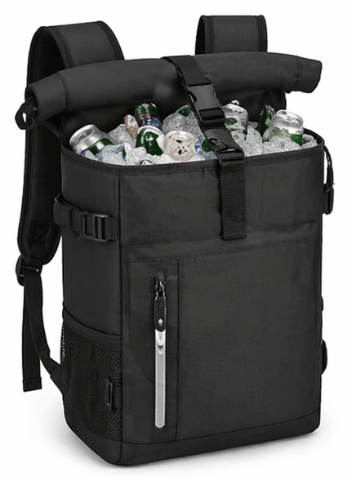
To clean a cooler bag, empty it, wash it with mild soap and warm water, sanitize it only after risky spills, and dry it fully before storage. Check the manufacturer’s care label before you start; harsh bleach, heavy agitation, and machine washing can crack PEVA liners or ruin sealed seams.
Read the care label before the first wipe
Most cooler bags are layered things. An outer shell (usually polyester, nylon, or RPET) surrounds an insulation core (like EPE foam) and a food-grade inner lining (often PEVA, foil, or TPU). You clean them by respecting the weakest layer, not the toughest one.
The Yeti Hopper M20 Backpack Cooler uses a welded DryHide double-TPU shell and requires specific care, including zipper lubrication. Igloo’s Everyday Lunch Cooler Bag has a spray-coated water-resistant exterior and an antimicrobial wipeable liner. RTIC is blunt about it: their soft coolers are “Hand wash only.”
Material and Care Quick Table
| Material | Common Uses | Cleaning Limitation |
|---|---|---|
| PEVA / EVA | Soft lunch bags | Degrades under harsh bleach or high heat. |
| Foil-lined | Budget cooler bags | Cracks easily; do not machine wash or scrub. |
| TPU | High-end soft coolers (Yeti) | Resists punctures but requires zipper maintenance. |
| Polyester Shell | Exterior fabric | Spot clean only; soaking ruins internal cardboard bases. |
That last row matters more than it looks. Some of these bags still hide a cardboard base.
Empty it completely and isolate the mess
Do this before you even think about soap. Food wrappers, loose ice cubes, gel packs, the removable hard base if there is one.
Pre-Clean Checkpoints
- Remove all food wrappers, loose ice cubes, and gel packs.
- Detach any removable hard bases, straps, or plastic inserts.
- Turn soft-sided lunch bags inside out (if the material permits) over a trash bin.
- Blot wet spills like melted popsicle syrup or yogurt with a dry paper towel immediately.
Most of the buildup hides in internal corners, stitched seams, and zipper folds.
Use the default wash method that fits most cooler bags
Most cooler bags should be hand-washed with mild soap, warm water, and a soft cloth. A standard wash is low-moisture cleaning: enough to remove food residue without saturating the bag.
Soaking the entire bag can trap moisture in the foam insulation or dissolve the cardboard base inserts used to hold the bag’s shape. That is the part people miss when they assume “gentle cycle” means safe.
Tool List
- Soft microfiber cloth
- A soft-bristled brush for exterior dirt
- Mild dish soap
- Dry towel
Step-by-Step Sequence
- Mix a few drops of mild dish detergent into lukewarm water.
- Dampen the microfiber cloth and wipe the interior PEVA or foil lining.
- Use the soft brush lightly on fabric exteriors to lift surface dirt.
- Wipe away soap residue with a fresh damp cloth.
- Towel dry all surfaces immediately.
Escalate to sanitizing only after high-risk spills
You only need to sanitize a cooler bag after contamination such as raw meat juice, spoiled dairy, mold, or similar high-risk spills. Ordinary condensation and crumbs do not need the bigger response.
The USDA Food Safety and Inspection Service (FSIS) warns that bacteria multiply rapidly to unsafe levels when perishable food sits in the “Danger Zone” between 40°F and 140°F for more than two hours. If your cooler bag reaches these temperatures and raw chicken juice leaks, you must sanitize the liner.
Warning: Raw Meat and Mold Scenarios
Never use undiluted bleach. Harsh chemical cleaners degrade food-safe PEVA linings and weaken waterproof coatings.
Decision Table: Clean vs. Sanitize
| Mess Type | Action Required | Recommended Agent |
|---|---|---|
| Melted ice, crumbs, condensation | Wash | Mild dish soap and warm water |
| Leaked juice, soda, condiment spills | Wash | Warm soapy water, soft brush |
| Raw meat juice, fish blood | Sanitize | Diluted food-safe sanitizer |
| Heavy mold, spoiled milk | Sanitize | Enzyme cleaner, diluted vinegar |
Match the fix to the problem: odor, grease, sugar, or mildew
Instead of running the bag through a washing machine, treat the specific mess. Anecdotally, users on r/CleaningTips report success removing heavy dairy spills like leaked creamer by soaking the affected area with an enzyme-based laundry detergent and white vinegar for two hours.
Troubleshooting Table
| Mess | Solution |
|---|---|
| Fish or Meat Odor | Mix 50/50 white vinegar and water, apply locally, wipe clean. |
| Sticky Sugar (Juice/Popsicles) | Apply warm water and mild dish soap; scrub lightly with a sponge. |
| Greasy Film (Sunscreen/Mayo) | Dab white vinegar directly onto a cloth and wipe the residue. |
| Mildew Smell | Sprinkle baking soda inside, zip closed overnight, wipe out the next day. |
Once something gets past the seam tape, you are not really cleaning a surface anymore.
Do/Don’t List for Odor Removal
- DO use baking soda to absorb smells overnight.
- DO wipe the interior with a cloth saturated in vanilla extract for persistent odors, as recommended by RTIC.
- DON’T use heavy floral air fresheners that will transfer toxic fragrances to your food.
Drying is where cooler bags are won or lost
A cooler bag is not fully clean until it is completely dry inside seams, corners, and pockets. Complete drying is the moisture-removal step that prevents mold from returning.
This is the section people rush, and it is usually the section that decides whether the bag stays usable or starts smelling wrong again. Storing a damp cooler bag causes structural degradation, permanent odor, and toxic mold growth. Damp storage also degrades multi-layer insulation and food-grade PEVA linings. If the interior still feels cool and a little clammy in the bottom corners after you’ve towel-dried everything and propped the main compartment wide open and pulled out any fabric pockets or removable liners, it is not dry, regardless of how dry the shell looks. Keep the zipper tracks open for several days to allow hidden moisture to evaporate. Keep the bag out of direct sunlight to prevent waterproof layers from warping. I know the tidy answer is dry it for 24-48 hours and put it away; I still leave the zipper tracks open longer if there is any doubt, especially on heavier bags, because that last bit of hidden moisture is what comes back to punish you.
Drying Checklist
- Towel-dry the interior immediately after washing.
- Prop the main compartment wide open to ensure maximum airflow.
- Pull out any fabric pockets or removable liners.
- Keep the zipper tracks open for several days to allow hidden moisture to evaporate.
- Keep the bag out of direct sunlight to prevent waterproof layers from warping.
Usually the bottom corners first.
Common cleaning mistakes that damage liners and seams
Many consumers accidentally destroy their insulated bags by treating them like regular laundry. I’ve seen estimates as high as 64% of reusable bags harbor bacteria, but aggressive cleaning methods cause premature failure.
Mistakes Table
| Mistake | Why It Causes Damage |
|---|---|
| Machine Washing | Agitation cracks foil linings and turns internal cardboard bases into mush. |
| Undiluted Bleach | Strips the waterproof and food-safe coating off PEVA liners. |
| Tumble Drying | High heat melts insulation foam and destroys waterproof seam tape. |
| Neglecting Zippers | Heavy-duty waterproof zippers stick, corrode, and break if not lubricated. |
Machine washing is the repeat offender.
Build a simple maintenance routine and know when to replace the bag
Replace a cooler bag when the liner is cracked, seams are failing, mold returns repeatedly, or odor remains after proper cleaning. A replace-not-clean case is a bag condition where hygiene or leakproof performance can no longer be restored.
Maintenance Checklist
- Empty and wipe out condensation immediately after every use.
- Wash with mild soap monthly or after visible spills.
- Dry completely in a ventilated room for 24-48 hours.
- Apply food-grade silicone lubricant to waterproof zippers.
Replace-or-Keep Table
| Condition | Decision | Reason |
|---|---|---|
| Sour smell disappears after vinegar wash | Keep | Surface odor only; insulation is intact. |
| Sour smell persists after 3 washes | Replace | Contaminated liquid has breached the seams and soaked the inner foam. |
| Minor exterior scuffs | Keep | Cosmetic wear does not affect thermal retention. |
| Foil or PEVA lining is peeling | Replace | Flakes can contaminate food; thermal efficiency is lost. |
FAQ
1. Can you put a cooler bag in the washing machine?
Most cooler bags cannot go in the washing machine. The heavy agitation tears waterproof seam tape, cracks foil liners, and destroys the internal cardboard bases used to hold the bag’s shape. Even when the shell comes out looking fine, the bag can hold moisture in the insulation and dry badly afterward.
2. How do you remove bad smells from a cooler bag?
Start with baking soda overnight. If the smell lingers, wipe the interior with a cloth lightly saturated with vanilla extract.
3. Can you use bleach inside an insulated cooler bag?
No. Harsh chlorine bleach degrades food-grade PEVA and TPU liners. If you must sanitize after a raw meat spill, use a highly diluted food-safe sanitizer or an enzyme-based cleaner.
4. How do you clean mold from a cooler bag?
Apply a white vinegar solution to the affected area. Scrub gently with a soft brush, wipe clean with warm soapy water, and leave the bag completely open in a well-ventilated room until it is fully dry.
5. When should you replace a cooler bag instead of cleaning it?
Discard the bag if the interior lining cracks, the seams split open, or a bad odor persists after multiple deep cleans. Persistent odor indicates that bacteria have penetrated the inner foam insulation.